Removing Leaves, Sediment and Roof Debris
We remove accumulated leaves, twigs, pine needles, shingle granules, and other material from the gutter runs. Clearing the channels allows water to reach the outlets without passing through layers of debris.

Overflowing gutters, leaking sections, or rainwater collecting around your home? Gainesville Gutters provides gutter cleaning, installation, repair, and leaf protection services in Alachua, FL.
We clear blockages, fix damaged sections, and install new rainwater systems for residential properties. Whether you need routine maintenance or a complete replacement, contact us to discuss the work and request an estimate.
Gainesville Gutters handles common rainwater drainage problems, from blocked outlets to damaged gutters and new installations.
Packed leaves, roof grit, and sediment can stop water from reaching the downspouts. Our cleaning service removes accumulated debris, clears blockages, and checks for visible drainage issues.
New gutters need the correct size, slope, and downspout layout for the roof they serve. We install aluminum systems that collect runoff and direct it toward suitable discharge points.
Loose hangers, leaking end caps, separated joints, and sagging sections do not always require a full replacement. We inspect the affected area to determine which components need attention.
Micro mesh and screen guards help keep leaves and other material from entering gutter channels. We help homeowners choose protection based on nearby trees, roof conditions, and the existing system.
Seamless aluminum gutters use continuous runs with fewer joints than sectional systems. This reduces potential leak points along straight sections and allows the material to fit the measured roofline.
Corrosion, repeated leaks, damaged fascia, or several failing sections can make continued repairs impractical. We assess the existing system and discuss replacement options when individual fixes are no longer sufficient.
Properties with mature oak and pine trees can collect considerable roof debris. Spring leaf drop, oak catkins, pine needles, and small twigs gradually build up along gutter channels and inside outlets.
The University of Florida IFAS Extension identifies spring as the flowering period for live oaks, when their small flower clusters, called catkins, appear. Those materials can collect with leaves and sediment in roof drainage systems.
Alachua’s seasonal rainfall makes blocked drainage particularly noticeable. Water may spill over the front edge, run behind the fascia, or discharge too close to the building.
Conditions vary from one property to another. A home beneath overhanging branches may need more attention than a house with an open roofline.
A thorough cleanout should address both the horizontal channels and the downspouts that carry water away from the roof.
We remove accumulated leaves, twigs, pine needles, shingle granules, and other material from the gutter runs. Clearing the channels allows water to reach the outlets without passing through layers of debris.
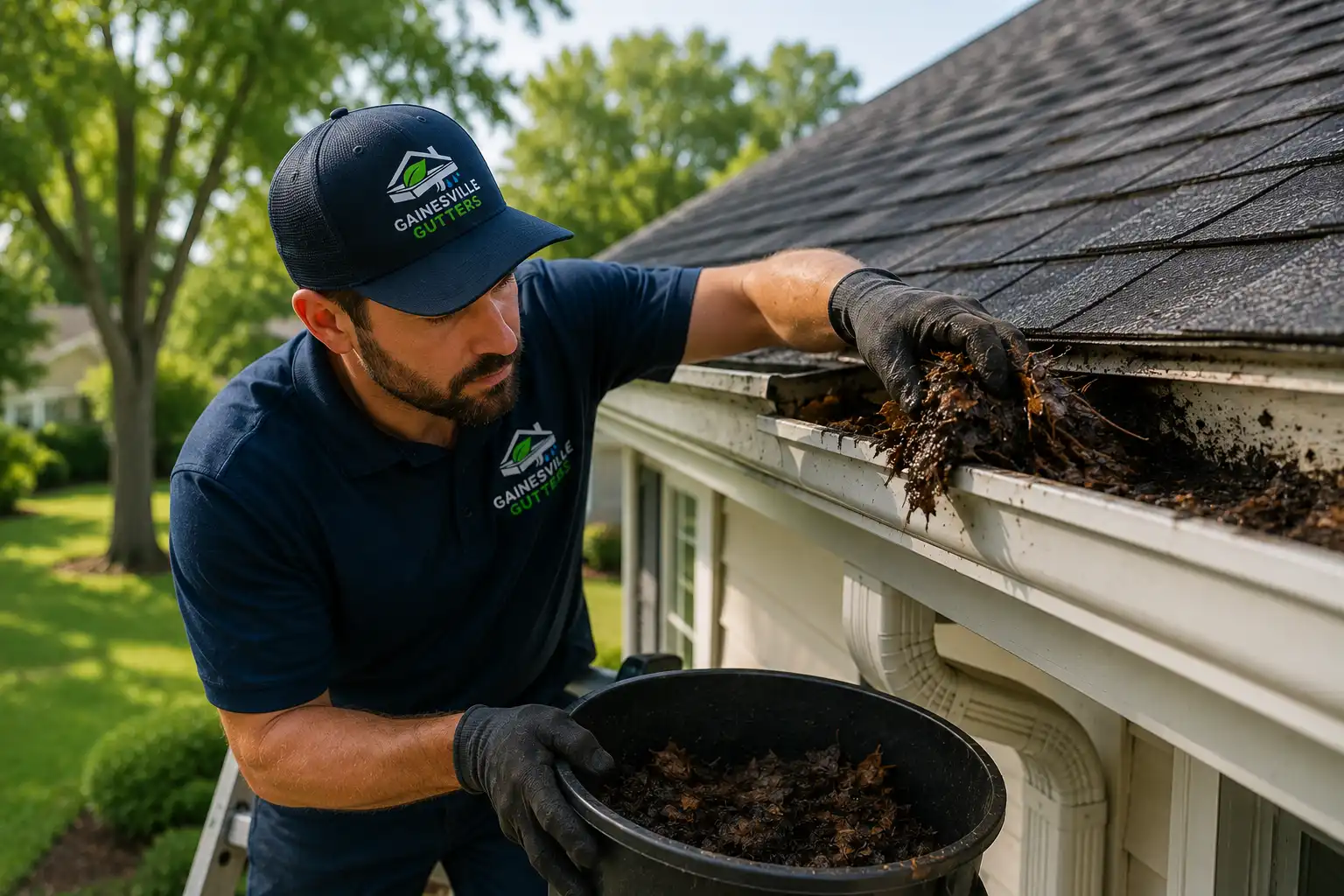
An open gutter can still overflow when the outlet or downspout is blocked. We check these areas and clear accessible obstructions so runoff has a path through the system.
Cleaning also provides an opportunity to identify loose attachments, leaking joints, corrosion, and sections holding standing water.
If the inspection reveals a problem beyond ordinary maintenance, we can explain whether additional repair work may be needed.
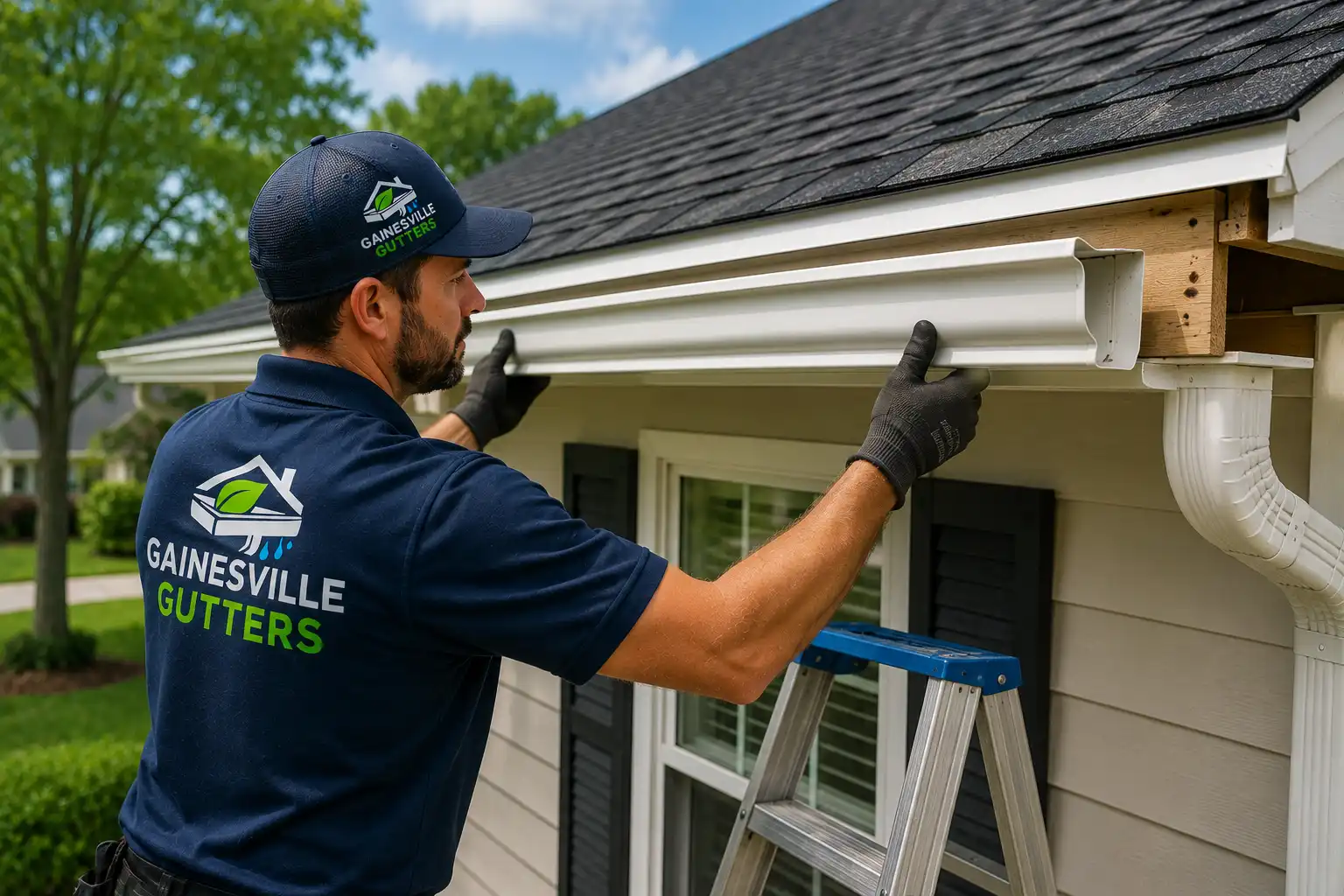
A new system should match the roof's drainage requirements, not simply the length of the eaves.
Continuous aluminum sections reduce the number of joints along straight runs. However, material alone does not determine performance. Correct sizing, secure attachment, and outlet placement are equally important.
Both sizes are common on residential properties.
A 5 inch K style gutter may provide enough capacity for smaller roof sections with suitable downspout placement. A 6 inch profile can carry more water and may suit larger drainage areas or rooflines that concentrate runoff.
The correct choice depends on roof area, pitch, rainfall intensity, and the number and capacity of the outlets. A larger gutter is not automatically necessary for every Florida home.
The channel needs enough slope to move water toward its outlet without allowing it to collect along the bottom.
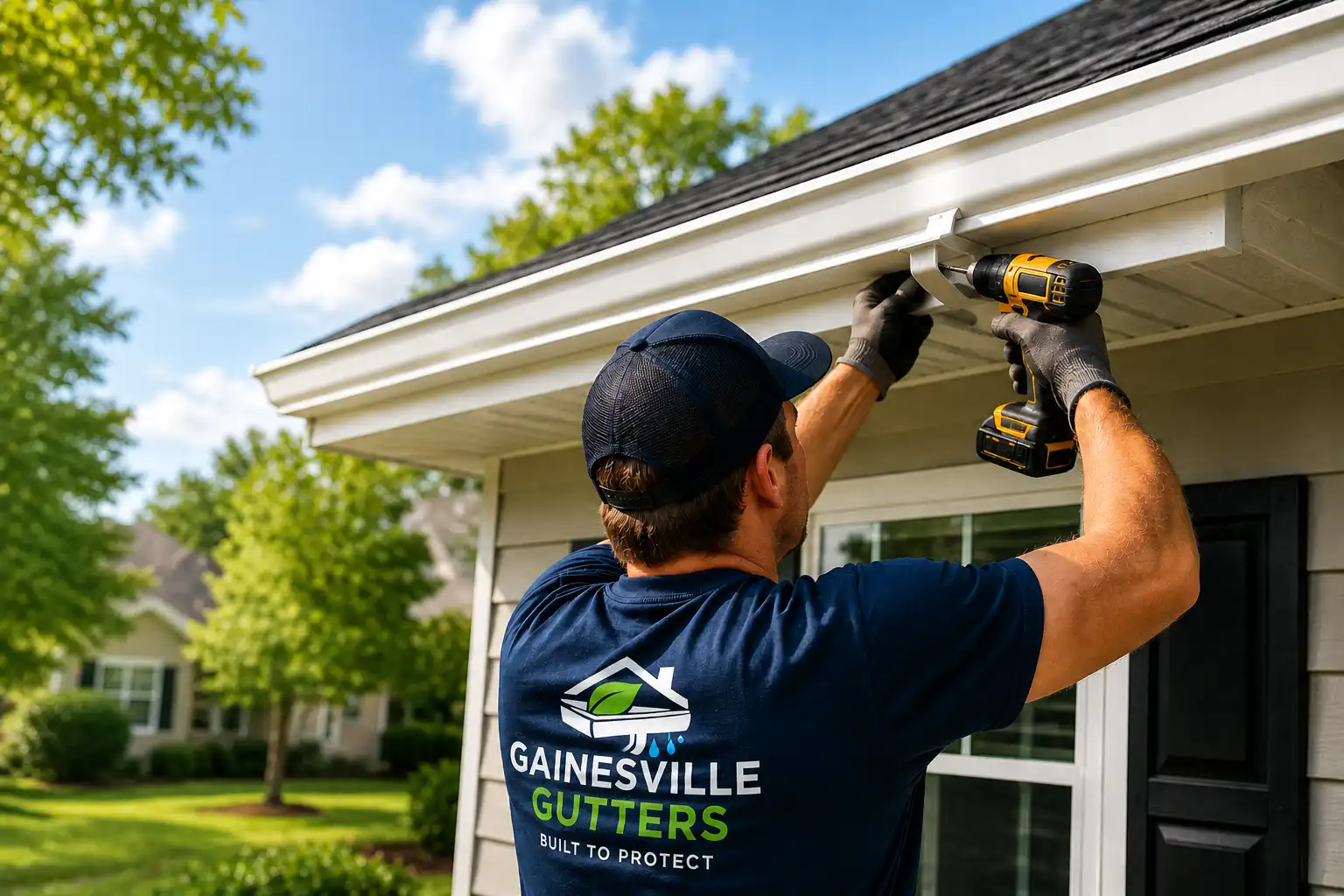
Hangers must secure the system to a sound mounting surface. Downspouts also need suitable locations so water does not discharge onto walkways, against exterior walls, or into poorly draining areas.
Before installation, the roof edge and fascia should be checked for damage that could affect attachment.
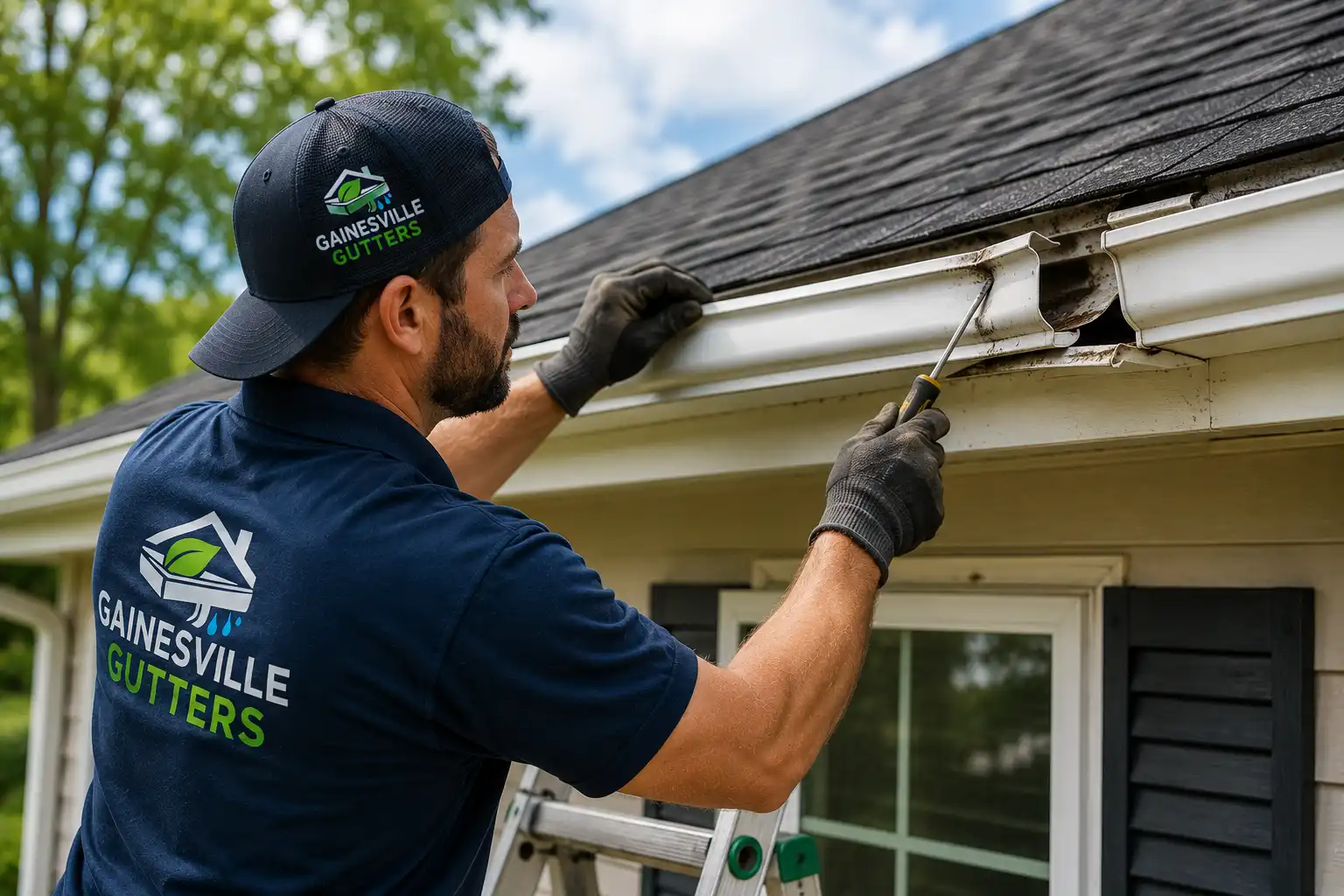
Many failures affect only one part of the system. A leaking end cap may need resealing. A loose section may need new hangers. A disconnected elbow can often be reattached or replaced without removing the entire downspout. However, repeated failures across several runs can indicate a larger problem.
Widespread corrosion, severely distorted channels, deteriorated mounting surfaces, or sections that no longer hold the correct slope may justify replacement. The decision depends on the extent of damage, the condition of the remaining material, and the cost of the proposed repairs. An inspection helps determine whether a targeted fix will address the cause or whether a new system would be more practical.
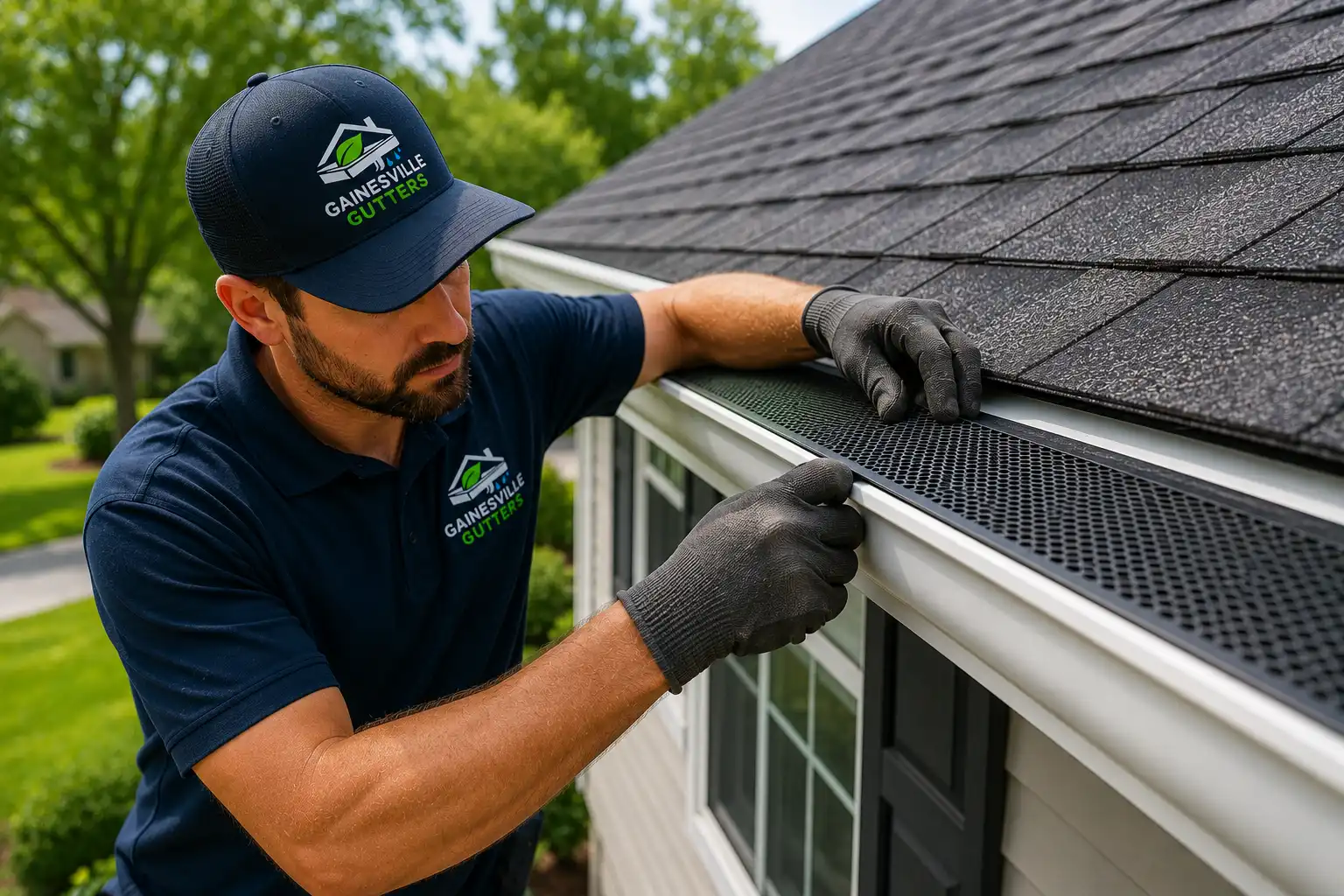
Homeowners who regularly find leaves and needles inside their gutters may benefit from added protection. Micro mesh guards use fine openings to block smaller debris. Standard screen guards have wider openings and generally handle larger leaves and twigs.
The choice depends on what falls from nearby trees and how the existing system performs during rain. Guards can reduce the amount of material entering the channels, but they do not eliminate maintenance. Pollen, dirt, and leaves may collect on top, while downspouts can still develop blockages.
Existing gutters should be cleaned and checked for damage before guards are fitted.
Cleaning the gutters does not solve every water problem. If a downspout releases runoff directly beside the foundation, repeated rainfall can saturate nearby soil. Water may also wash away mulch, erode landscaping, or splash against the exterior wall.
The U.S. Department of Energy recommends carrying roof runoff away from a building through suitable downspouts, grading, or other drainage arrangements. Its guidance discusses directing water to an appropriate discharge point beyond the foundation area.
Source: U.S. Department of Energy, Foundation Drainage
Depending on the property, an extension, improved outlet placement, or a suitable underground drain may help move water farther from the house. Our downspout and drainage services address problems that continue after water leaves the roofline.
Costs vary according to the service, property access, materials, and condition of the existing system.
The estimate depends on total gutter length, home height, debris accumulation, and whether the downspouts need additional clearing. Difficult roof access may increase the labor involved.
Pricing depends on the affected components and the work required to restore them. Replacing a loose hanger is different from correcting a long sagging run or repairing damaged fascia.
New systems are generally priced according to material, linear footage, gutter size, roofline complexity, and the number of outlets.
Leaf guards, extensions, or underground drainage can add to the scope.
A written estimate should identify the proposed work, material selection, and any preparation or additional repairs needed before installation.
Call us or submit the contact form. Describe the issue, the type of property, and whether you need cleaning, repairs, or new gutters.
We review the affected sections, attachment points, and drainage conditions to understand the required work.
We explain the proposed service and provide an estimate. If the condition of the existing system affects your options, we discuss it before proceeding.
We carry out the agreed work, inspect the relevant connections and drainage paths, and clean up debris from the service area.
Gainesville Gutters provides residential gutter services in Alachua, including properties around the US Highway 441 corridor, downtown Alachua, and the Turkey Creek area. We work with homeowners whose properties have different roof designs, tree coverage, and drainage conditions.
Alachua is a separate city within Alachua County, north of Gainesville. Our service coverage is not limited to the City of Gainesville. Contact us with your address to confirm availability in ZIP code 32615 or a nearby community.
Gainesville Gutters provides cleaning, repairs, installation, replacement, leaf protection, and downspout services.
This allows homeowners to discuss the actual problem before choosing a service. Overflowing water may call for debris removal, a change in slope, or a drainage adjustment rather than a new gutter system.
We review the affected area, explain the recommended work, and provide an estimate so you know what the service involves before making a decision.
Twice a year is a reasonable starting point for many homes, but there is no schedule that suits every property. Homes with overhanging oaks or pines may need more frequent attention. Inspect the system after major storms or significant debris accumulation.
Yes. A blockage can prevent water from leaving the channel even when the visible gutter is mostly clear. Water then backs up and may spill over the edge. Clearing the outlet and pipe can resolve this when blockage is the cause.
Often, yes. Leaks can develop at end caps, outlets, corners, or other connections even when the main run has no joints. Repairs depend on the damage and the condition of the surrounding metal.
The best size depends on the roof drainage area, pitch, rainfall intensity, and outlet capacity. A larger profile can handle more runoff, but it must be paired with appropriate downspouts and installed at the correct slope.
In many cases, they can. The gutters must be properly attached, correctly sloped, and free of accumulated debris before installation. Some products may not fit every profile or roof edge.
Ask for the total linear footage, material and profile, downspout quantity, removal of old material if applicable, preparation work, and the full quoted price. The contractor should also explain any exclusions or repairs that may affect the cost.
We serve Alachua and surrounding areas, subject to scheduling and property location. Call (352) 327-7333 or send your address through our contact form to confirm availability.
Need clogged gutters cleared, a leaking section repaired, or a new system installed?
Contact Gainesville Gutters with your address and a brief description of the work. We can review your request and discuss the next steps.